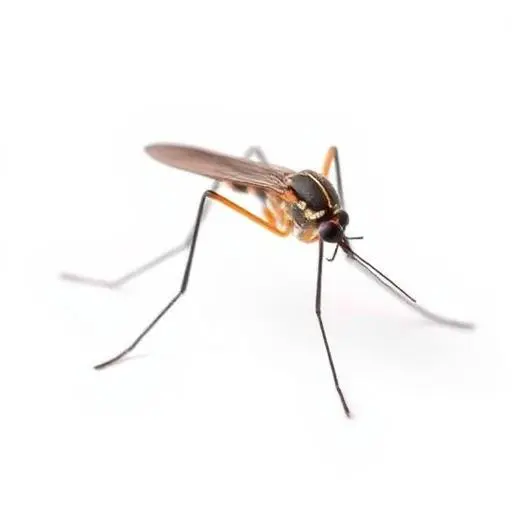
Mosquito identification
Adults are slender flies, commonly about ⅛–⅜ inch long, with long legs, narrow wings, and a projecting proboscis. Color and markings vary; some species have contrasting white bands on dark bodies or legs. Crane flies are usually larger and lack a mosquito’s prominent biting mouthparts, while midges can resemble mosquitoes but do not bite. Larvae often wriggle in standing water. Only female mosquitoes bite, and species identification may require magnification rather than judging size alone.
Where you'll find it in Atlanta homes
Atlanta breeding sites include clogged gutters, plant saucers, buckets, tarps, birdbaths, and containers hidden in ivy or shrubs. Adults rest in shaded vegetation and humid sheltered areas. Warm Georgia weather supports activity from spring into fall, with local conditions determining the season’s edges. Rain can refill breeding sites, while irrigation sustains water during dry spells. Some species bite during daylight and others around dusk or night, so exposure is not limited to evening cookouts.
Prevention tips
- Empty and scrub water-holding containers at least weekly.
- Clear gutters and correct drainage that leaves standing water.
- Cover rain barrels with intact mosquito-proof screening.
- Use an EPA-registered repellent according to its label.
- Repair screens and use fans to improve comfort in seating areas.
- Use labeled mosquito larvicides only where appropriate for water that cannot be drained.
When to call a professional
Call when biting remains disruptive after water removal or breeding sites are difficult to locate or access. Allsect starts with an inspection to confirm the pest, locate activity, and identify conditions supporting it. Allsect would inspect standing water and resting areas before recommending source reduction and any appropriate targeted service, with realistic expectations rather than a promise of a mosquito-free yard. You will receive an honest recommendation based on the findings, including whether monitoring or simple repairs may be enough.
Common questions
Will treating my yard stop every mosquito?
No; adults can enter from surrounding properties, and rain can create new breeding sites. Source reduction, personal protection, and appropriate targeted service work together. An inspection should explain what can be changed on your property and what lies beyond its boundaries.
When should I seek care after mosquito bites?
Seek medical advice for fever, severe headache, unusual rash, worsening symptoms, or signs of infection after bites, and mention recent outdoor exposure or travel. Emergency symptoms such as breathing difficulty or severe neurological changes need immediate care. Most itchy bites alone do not identify an infection.