
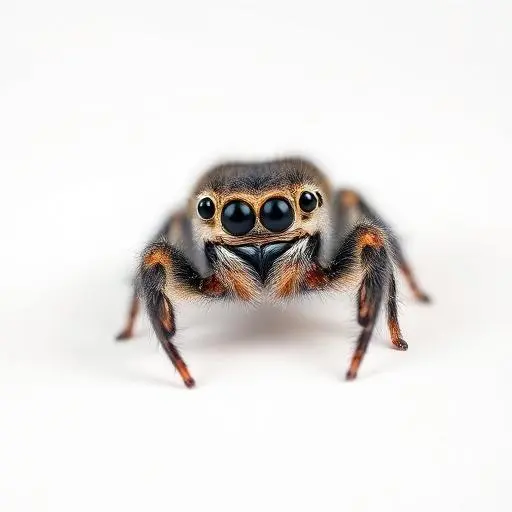
Jumping spider identification
Most are compact spiders about ⅛–¾ inch in body length, with relatively short, sturdy legs and a large, forward-facing pair of eyes. Colors vary widely, including black, brown, gray, iridescent markings, and contrasting spots or stripes. They move in short bursts and may turn toward nearby movement. Some resemble small hairy wolf spiders, but their large front eyes and compact shape are distinctive. Their jumping ability is used for hunting and escape, not an indication of aggression.
Where you'll find it in Atlanta homes
In Atlanta, look on sunny siding, fences, deck rails, garden plants, and window frames where small insects are active. Indoors they often appear near windows after entering through a door or screen gap, or arriving on outdoor items. Warm Georgia weather supports abundant prey, although spiders may be seen inside during other seasons. Small silk retreats can occur in crevices, but these are resting or egg-protection shelters rather than the large prey-catching webs homeowners commonly notice.
Prevention tips
- Repair window screens and check door seals.
- Inspect outdoor items before bringing them inside.
- Reduce insect attraction around brightly lit entrances.
- Relocate isolated spiders with a cup and card when safe.
- Avoid handling spiders directly or trapping them against skin.
When to call a professional
Call when repeated indoor sightings accompany substantial insect activity or when the spider cannot be identified confidently. Allsect starts with an inspection to confirm the pest, locate activity, and identify conditions supporting it. Allsect would inspect entry points and prey sources before recommending exclusion or targeted pest management; an isolated jumping spider generally does not justify widespread spraying. You will receive an honest recommendation based on the findings, including whether monitoring or simple repairs may be enough.
Common questions
Will a jumping spider jump at me?
Jumping spiders usually leap to catch prey or escape, and may face nearby movement because they have good vision. That does not mean they are attacking. Give the spider space or gently relocate it with a container rather than handling it.
Why is it always on my window?
Sunlit windows attract small insects and provide warm hunting surfaces, making them useful places for jumping spiders to search for food. Repeated sightings may suggest screen gaps or plentiful prey nearby. Check those conditions before considering any pesticide use.